
In September 1796, our first president, George Washington, issued his farewell address. In it, he warned against both internal and external threats to the young nation and called for preserving national unity as the foundation of liberty and prosperity.
Washington believed that these threats could weaken America’s cohesion and saw one internal danger as especially worrisome: the rise of political parties.
He spoke of the “baneful effects of the spirit of party,” noting that this spirit is “inseparable from our nature, having its root in the strongest passions of the human mind.” In other words, humans are naturally inclined to divide into tribes of us vs. them, and in democracies, this instinct can grow into hyper‑partisanship — a force he considered “their worst enemy.”
Washington went even further though, warning that “The alternate domination of one faction over another, sharpened by the spirit of revenge, natural to party dissension, which in different ages and countries has perpetrated the most horrid enormities, is itself a frightful despotism”. And that eventually, “the chief of some prevailing faction” would use this division “for his own elevation, on the ruins of public liberty.”
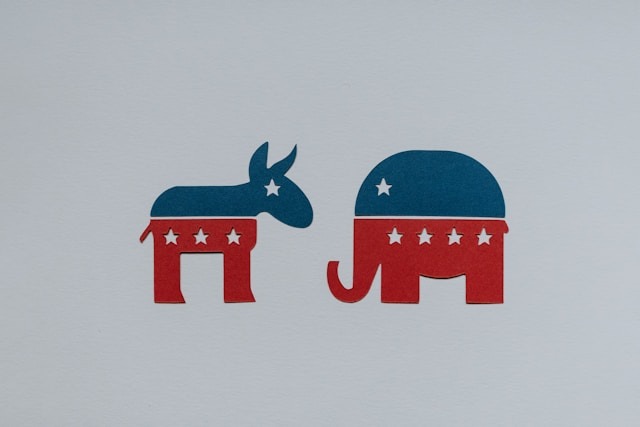
More than two centuries later, these warnings have not only come to pass — they have become a normal part of American political life. Our two major political parties have grown into powerful brands, each with its own identity, agenda, and loyal customer base. Together, they form a political duopoly that shapes our choices, narrows our debates, and prioritizes party success over national unity.
It may seem obvious that we now live in the kind of party‑driven environment Washington feared, but the scale of the problem — and the way it distorts our country — is not discussed enough. And that’s not surprising. In our two‑party system, the parties themselves have very little incentive to highlight a problem that would limit their own power.
But that’s exactly what we’ll do here. In this article, we’ll examine how the Democratic and Republican parties have become Party Inc. — two corporate-like institutions with an entrenched duopoly over American politics — why this creates problems for our democracy, and how systemic changes could help build a more prosperous and unified America.


1 Comment Leave a Reply