
Earlier this year, as I pulled into a gas station, I noticed something strange on the fuel dispenser.
When I got out of my car, I saw it was a sticker of Donald Trump pointing at the sale price, with the words, “Miss me yet?” As I looked around, I saw stickers on most of the dispensers. Some showed Joe Biden and said, “I did that!” Others were different versions of Trump.
As the weeks passed, I also saw these stickers in grocery stores pointing at food prices, and while they were funny, they all implied one serious thing: the president is the reason for inflation and the source of our economic problems.
That instinct is understandable. Presidents are the most visible political figures in the country, so when prices rise, they become the easiest target to blame.
But the economy is not that simple. Presidents influence it, but they do not control it. Inflation is shaped by supply and demand, global shocks, market expectations, and the decisions of institutions like the Federal Reserve. If we want to understand why prices rose so sharply, we have to look beyond campaign slogans and gas-pump stickers to the economic choices made over the last several decades.
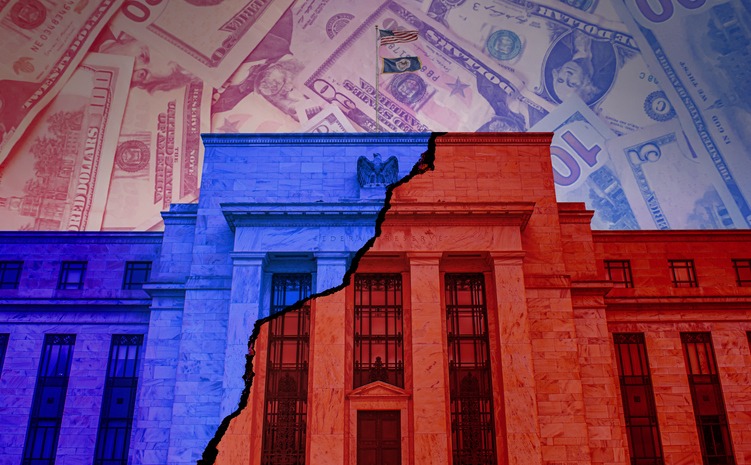
Those economic choices usually come through two major tools: fiscal policy and monetary policy. Fiscal policy is taxing and government spending, controlled by Congress and the president, which means it can quickly become politicized. Monetary policy, by contrast, involves controlling interest rates and the money supply. It is managed by the Federal Reserve, the nation’s central bank, which is designed to operate independently of direct political pressure.
That distinction matters because when fiscal policy becomes too divided or too political, more pressure falls on the Fed to stabilize the economy. Over the past few decades, that imbalance has forced the Fed to take on a larger role through monetary policy, which has both helped and hurt the economy.
In this article, we’ll look at how the response to the 2008 financial crisis, growing political division, an increasingly pressured Fed, and basic supply-and-demand fundamentals shaped the inflation story—and what lessons they offer for the future health of our economy and nation.



1 Comment Leave a Reply